On this page9 sections
- 01Why attics grow mould in the first place
- 02Signs you have mould in the attic
- 03Is attic mould serious?
- 04Step one is always the moisture source
- 05Can you remove attic mould yourself?
- 06Why the insulation usually has to come out
- 07What professional attic mould work involves
- 08What drives the cost of attic mould removal
- 09How to keep attic mould from coming back
Key takeaway
Found mould in your attic? What causes it in Toronto homes, when you can clean it yourself, why the insulation often has to go, and how to stop it returning.
01Why attics grow mould in the first place
Mould needs three things: spores, something to feed on, and moisture. Spores are everywhere and the wood sheathing and framing in an attic are good food. The only one of the three you can control is moisture — and in Toronto-area attics, moisture almost always comes from the house below rather than the roof above.
All winter, warm indoor air carries water vapour. It rises and leaks into the attic through gaps around light fixtures, plumbing stacks, wiring holes, the attic hatch, and the top plates of interior walls. When that warm, humid air meets roof sheathing that is close to outdoor temperature, the vapour condenses or freezes on the underside of the deck. Through January and February it can build up as frost, then melt on the first mild days and soak into the wood.
Several things make that much worse. Bathroom and kitchen exhaust fans that dump into the attic instead of venting outside put wet air directly into the space. Blocked soffit vents — often buried under blown-in insulation — stop the airflow that would normally carry moisture away. Roof leaks, flashing failures around chimneys and vents, and ice dams add liquid water on top of condensation.
This is why attic mould is so often concentrated on the north-facing slope, near the eaves, and around bathroom fan outlets. Those are the coldest surfaces, the places with the weakest airflow, or the places receiving the most moisture.
02Signs you have mould in the attic
The most common sign is dark grey to black staining on the underside of the roof sheathing, often heaviest between rafters on the north side and along the lower part of the roof. It may be spotty or it may cover whole sheets of plywood or OSB.
In winter, look for frost on the underside of the sheathing or on the tips of roofing nails poking through. Rusty nail tips and small drip stains on the insulation below them are evidence that it has been happening for a while.
A musty smell at the attic hatch, or drifting from ceiling fixtures on upper floors, is another common clue. So are water stains on upstairs ceilings, insulation that looks damp, matted, or compressed, and daylight or staining around roof penetrations.
Not every discoloration is active mould. Old staining can remain after a moisture problem has been fixed. White crystalline deposits can be mineral salts rather than growth, and white fuzz on nails in January is often frost. If you cannot tell what you are looking at, have it assessed before you start scrubbing or tearing things out.
03Is attic mould serious?
It can be, for two reasons. The first is health. Health Canada treats mould growth in the home as something to clean up and fix at the source rather than live with, and people with asthma or allergies tend to be the most sensitive to it. An attic is separated from the living space, but air leaks run both ways and the same gaps that let moist air up can let musty air down.
The second is the structure. Mould itself is a symptom; the moisture behind it is what does the long-term damage. Sheathing that stays wet season after season softens and delaminates, roofing nails rust, and insulation that absorbs water loses much of its insulating value and holds that moisture against the wood.
The good news is that most attic mould in the GTA is surface growth on sheathing caused by a fixable air-leakage and ventilation problem. Caught early, it is a manageable repair rather than a roof replacement.
04Step one is always the moisture source
Cleaning mould without fixing the moisture is a waste of money. The U.S. EPA puts it bluntly: the key to mould control is moisture control. If the conditions that grew it are still there, it will grow back — usually by the next spring.
Start with the obvious sources. Check every bathroom and kitchen fan duct in the attic: it should be connected, insulated, and running to a proper exterior termination, not ending in the insulation or pointed at a soffit. Look at the roof penetrations for signs of leaking. Check that the soffit vents are open and that baffles are keeping insulation out of the eaves.
Then deal with air leakage from the house. Sealing the ceiling plane — top plates, wiring and plumbing penetrations, light fixtures, and the attic hatch — reduces the warm, humid air reaching the attic in the first place. It is the single most effective step for most GTA attics, and it is far easier to do when the old insulation has been removed.
Inside the house, Health Canada recommends keeping relative humidity between 30% and 50%. Running bathroom fans during and after showers, fixing plumbing leaks, and using a dehumidifier in damp basements all reduce the moisture load that eventually finds its way upstairs.
05Can you remove attic mould yourself?
Sometimes, if the area is genuinely small. Health Canada describes a small area as up to three patches, each smaller than one square metre (about 10 square feet), and says this can usually be cleaned by a homeowner. The EPA uses a similar threshold of about 10 square feet. Anything larger than about three square metres, or mould that keeps coming back after cleaning, is where Health Canada suggests professional help.
For a small area, Health Canada recommends safety glasses or goggles, a disposable N95 respirator, and household gloves, and says to clean with water and dish detergent — there is no need to use bleach. That last point surprises people, but spraying bleach on attic sheathing and walking away does not fix anything: it does not deal with the moisture, and bleach does not reliably penetrate porous wood.
The honest problem with attics is that small patches are rare. By the time a homeowner notices staining, it usually covers a large part of one or both roof slopes. The space is hot or cold, cramped, dusty, and hard to move through without stepping on the ceiling below. If the growth is spread across whole sheets of sheathing, treat it as a professional job.
06Why the insulation usually has to come out
Insulation is porous. When it has been wet, sat under mould growth, or absorbed musty odours, it generally cannot be cleaned in place. The EPA notes that absorbent materials may have to be thrown away if they become mouldy, because mould can grow into the material and be impossible to remove completely.
There is a practical reason too. Mould on the sheathing sits above the insulation, but the air leaks and moisture sources causing it are underneath — at the top plates, fixtures, and penetrations in the attic floor. You cannot air seal an attic floor that is buried under a foot of old insulation. Removing it is what makes the real fix possible.
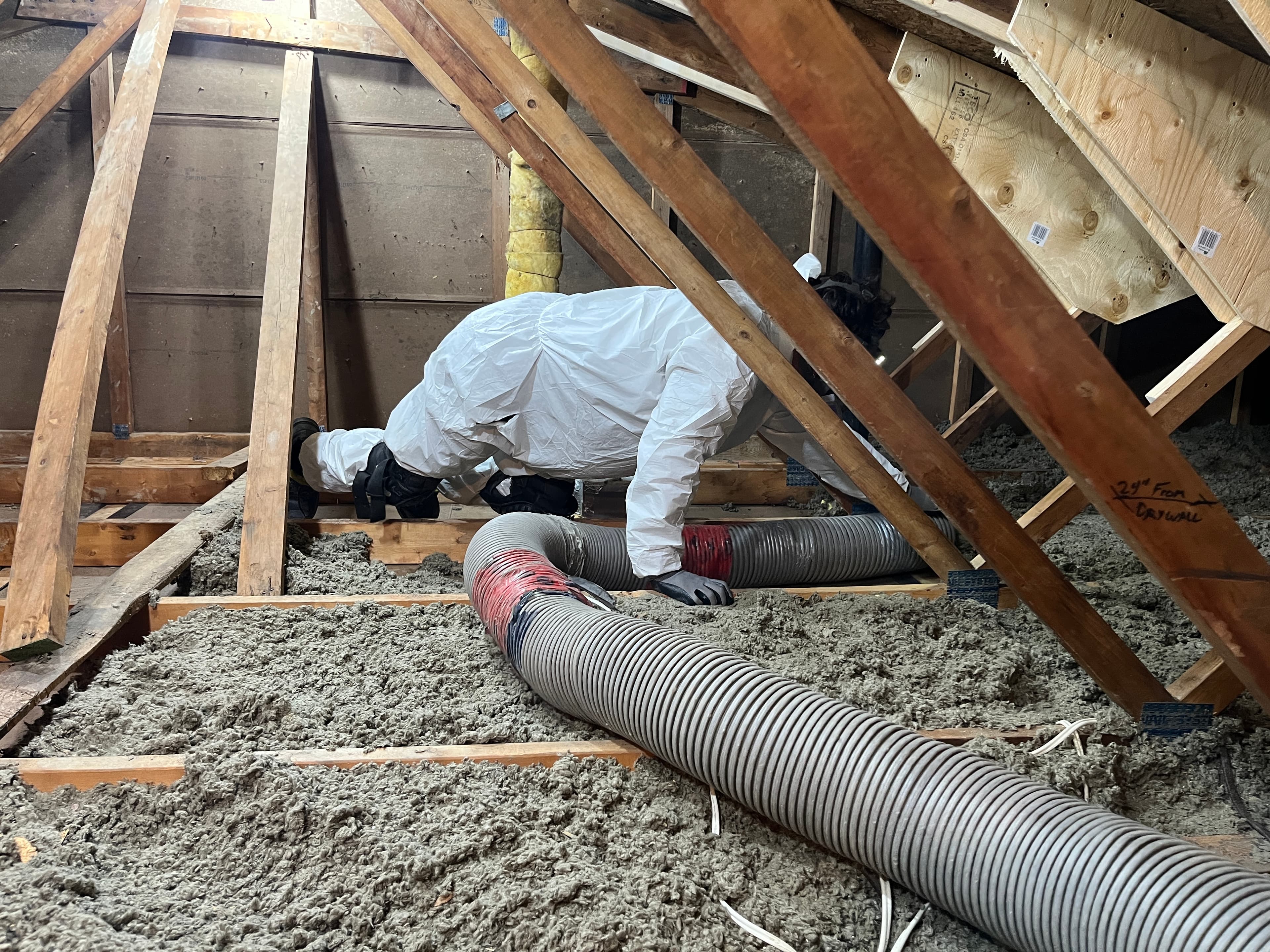
That is where insulation removal fits into the sequence. The contaminated material is vacuumed out and bagged, which exposes the whole attic floor. The sheathing and framing can then be assessed and cleaned or treated, the air leaks sealed, bathroom ducts corrected, baffles installed at the eaves, and fresh insulation installed to the right depth once everything is dry.
For a clean, dry attic with only minor, localised staining, removal may not be needed — the moisture source is fixed, the small area is cleaned, and the insulation stays. That is a judgement worth making on site rather than assuming either way.
07What professional attic mould work involves
A proper job follows the same order every time. First the cause is identified — leak, exhaust fan, air leakage, blocked ventilation, or a combination. Then contaminated insulation is removed with a high-powered vacuum that runs from outside the house, so debris goes straight into sealed bags rather than being carried through the home.
With the attic empty, the affected sheathing and framing are cleaned or treated. Severe growth — heavy, widespread contamination, or wood that has been damaged — may call for a dedicated mould remediation contractor with containment and air-filtration equipment, and in some cases replacement of damaged sheathing.
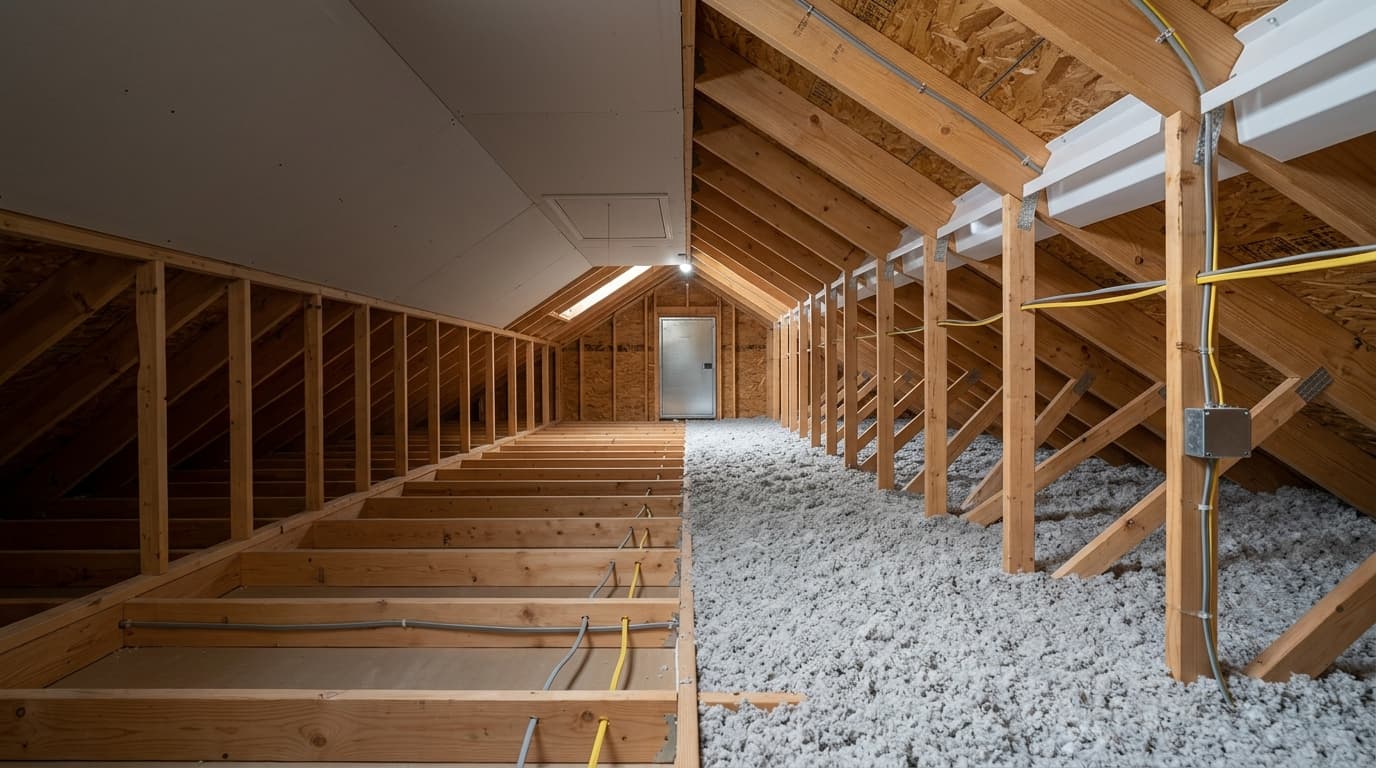
The attic is then made right: air sealing at the ceiling plane, exhaust fans properly ducted to the exterior, soffit vents cleared and baffled, and new insulation installed only once the space is dry.
At Attic Vac, we handle attic insulation removal and cleanup, including attics with minor mould and rodent contamination, along with air sealing and re-insulation. When we find growth that needs specialist remediation, we say so before the work starts rather than vacuuming around it.
08What drives the cost of attic mould removal
There is no honest single price for attic mould removal, because the scope ranges from cleaning a few square feet of sheathing to removing all the insulation and replacing damaged roof boards. The main cost drivers are the area of growth, whether the insulation has to be removed, how accessible the attic is, whether the moisture source needs repair, and what it takes to re-insulate afterward.
The biggest line item in many jobs is not the mould at all — it is the removal and replacement of the insulation, plus the air sealing and ventilation fixes that stop the problem recurring. Our guides to attic insulation removal cost and attic insulation cost in Toronto walk through those numbers in detail.
When you compare quotes, check that each one addresses the cause, not just the stain. A quote that covers spraying the sheathing but says nothing about exhaust ducts, air sealing, or ventilation is a quote for doing the job again in two years.
09How to keep attic mould from coming back
Seal the attic floor so humid house air stays in the house. Make sure every exhaust fan vents to the outside through a connected, insulated duct. Keep soffit vents clear with baffles at every rafter bay. Maintain indoor humidity in the 30–50% range, especially through winter.
Then look in the attic once a year — late winter is ideal, when frost and condensation are easiest to spot. A two-minute look from the hatch with a flashlight will catch a new problem years before it shows up as a ceiling stain.
Frequently asked questions
Can I remove attic mold myself?
Only for small areas. Health Canada considers up to three patches, each under one square metre, to be a small area a homeowner can usually clean with water and dish detergent while wearing goggles, an N95 respirator, and gloves. Larger or recurring growth — which is typical in attics — should be handled professionally, and the moisture source has to be fixed either way.
Is mold in the attic serious?
It should be dealt with rather than ignored. Mould can affect people with asthma and allergies, and the moisture behind it slowly damages sheathing, nails, and insulation. Most GTA attic mould is surface growth from a fixable air-leakage or ventilation problem, so it is usually manageable when caught early.
Do I need to replace mouldy attic insulation?
Usually, yes. Insulation is porous, and once it has been wet or sat under mould growth it generally cannot be cleaned in place. Removing it also exposes the attic floor so the air leaks causing the problem can be sealed before new insulation goes in.
Should I use bleach on attic mould?
Health Canada says there is no need to use bleach — water and dish detergent are sufficient for small areas. More importantly, no cleaner fixes the moisture problem that caused the growth, so cleaning without fixing the cause means the mould returns.
How much does attic mold removal cost?
It depends on how much sheathing is affected, whether insulation has to be removed and replaced, attic access, and what repairs the moisture source needs. For many homes the insulation removal, air sealing, and re-insulation are a larger share of the cost than the mould cleaning itself.
Sources
- 1.Mould — reduce humidity, moisture and mould in your home — Health Canada
- 2.A Brief Guide to Mold, Moisture and Your Home — U.S. Environmental Protection Agency
Written by
Attic Vac Insulation
A licensed and insured attic insulation contractor removing, installing and topping up insulation in homes across Toronto and the GTA, and renting the same 14 HP vacuum we work with.