
Confirm the material before it leaves the attic
Older loose fill in Markham's historic core can occasionally include vermiculite. Anything that looks suspect gets identified before it's treated like ordinary blown-in material.
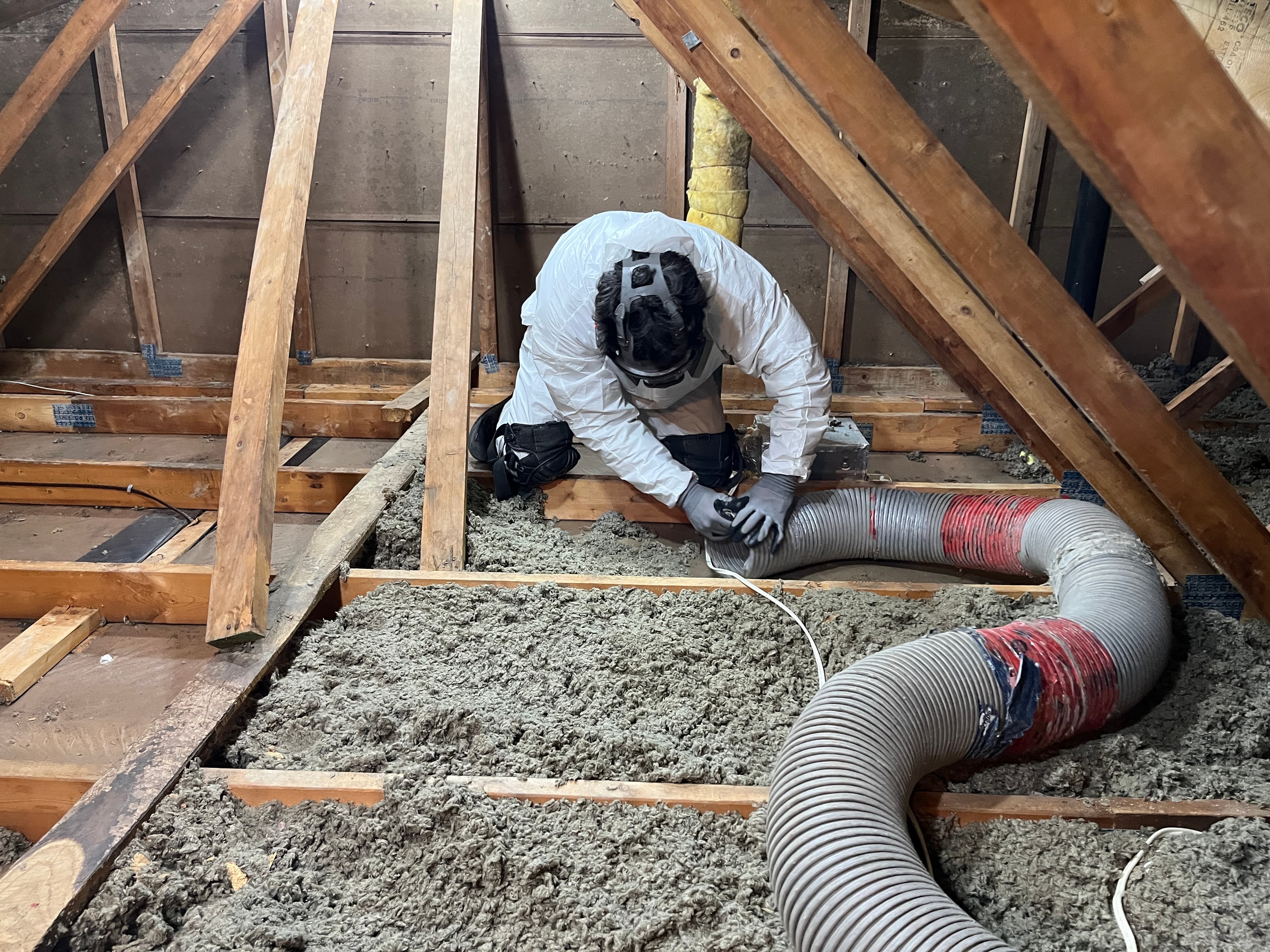
We provide clean, professional attic insulation removal across Markham, pairing the historic core around Unionville and Thornhill with large-scale subdivisions in Berczy, Cachet, and Cornell.
Older homes near Unionville and Thornhill are where we most often recommend removal before re-insulating — our guide on when removal makes sense covers the common reasons.
Helps remove aging insulation from Unionville and Thornhill homes.
Useful before re-insulating Markham's historic core.
Can support cleaner conditions from Cachet to Cornell.
Professional removal helps Markham homeowners get ready to re-insulate.
Local service
More in Markham
Markham removal scope
Markham's attic stock ranges from the historic core near Unionville and Thornhill to large subdivisions in Berczy, Cachet, Wismer, and Cornell. Removal should be justified by a specific condition — moisture, contamination, heavy disturbance, or the need to expose the ceiling plane for other work — rather than treated as a routine step before every re-insulation job.
Older loose fill in Markham's historic core can occasionally include vermiculite. Anything that looks suspect gets identified before it's treated like ordinary blown-in material.
A historic Unionville or Thornhill hatch often sits in a smaller, harder-to-reach spot than the walk-up attics common in Cornell or Wismer subdivisions, which changes hose routing and containment before work starts.
Once the ceiling plane is exposed, it's the easiest time to check for leaks, damaged baffles, and open penetrations, so we note what's found rather than closing everything back up at the same depth.
If only a section near a leak or a disturbed area is affected, the scope can target that area instead of clearing the whole attic by default.
Markham questions
Not by default. A targeted removal around the affected area is often enough when most of the material is dry and undisturbed. Full removal makes more sense for widespread contamination, moisture, or when the whole attic needs to be opened for other work.
Work stops on that section until it's identified or tested. Standard removal equipment isn't used on suspect vermiculite until a handling plan is confirmed.
Yes — with the ceiling plane exposed, it's the practical time to note leaks, damaged baffles, and open penetrations, even if the repair itself gets scheduled separately.
Yes, including Unionville, Thornhill, Berczy, Cachet, Wismer, Cornell, Box Grove, and Greensborough, depending on material and access.