On this page5 sections
Key takeaway
How to recognise vermiculite attic insulation, why it may contain asbestos, and what Toronto homeowners should do before disturbing it.
01What is vermiculite insulation?
Vermiculite is a natural mineral that expands significantly when heated. In its expanded form, it resembles small golden-brown or silver-grey pebbles, roughly 1 to 8 mm in size. It was widely used as attic insulation in North American homes from the 1950s through the late 1980s because it was inexpensive, lightweight, and relatively simple to install by pouring it between attic joists.
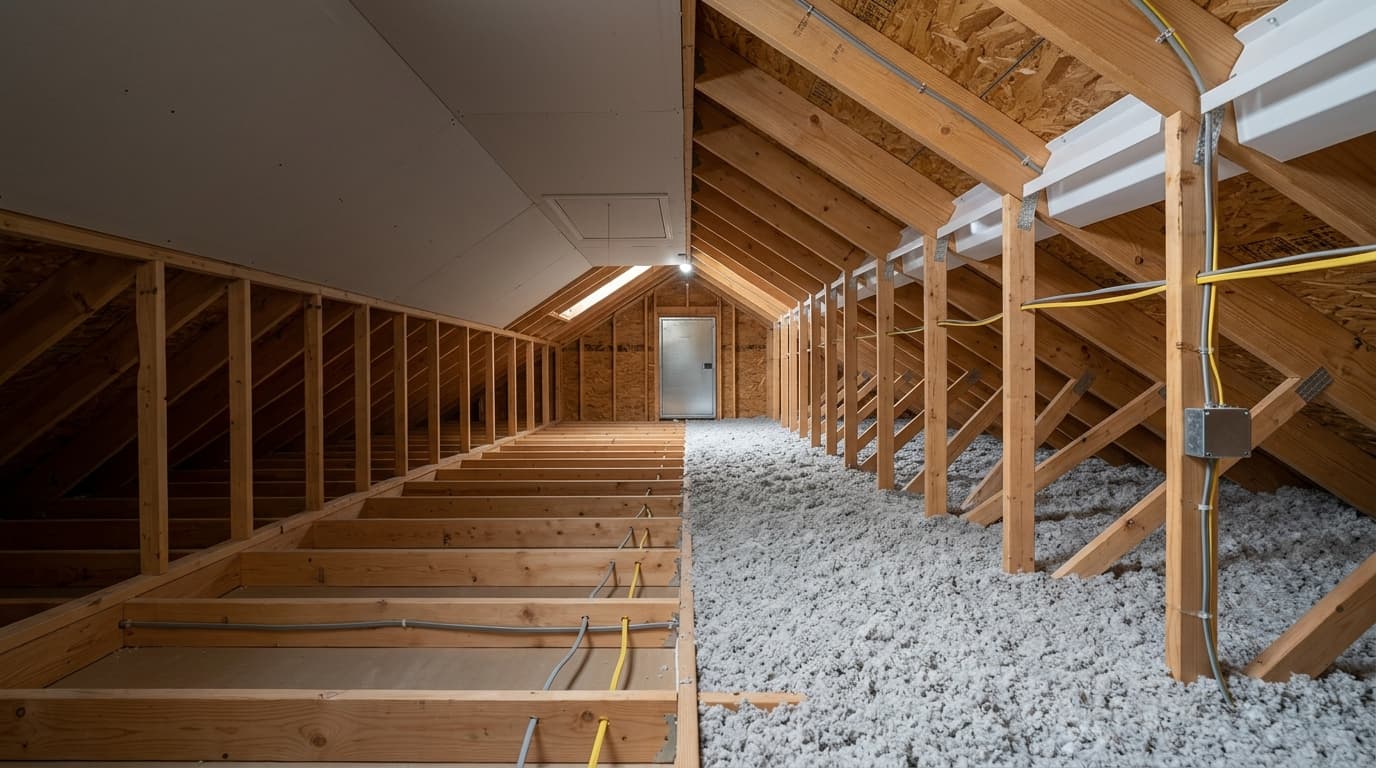
If your home was built before 1990 and has not had attic insulation upgrades since then, there is a chance your attic may still contain vermiculite. It is distinct from blown-in fibreglass (fluffy and white) or cellulose (grey and fibrous), so a visual check can sometimes help identify it.
02The concern about asbestos contamination
A significant portion of the vermiculite sold for attic insulation in North America came from a mine in Libby, Montana, which was found to be contaminated with a naturally occurring form of asbestos. This mine supplied the majority of the North American market until it closed in 1990.
Because of this history, Health Canada and the EPA in the United States recommend treating all vermiculite attic insulation as potentially contaminated with asbestos unless testing has confirmed it is safe. This precautionary approach is important because asbestos fibres can become airborne when the material is disturbed.
03How to identify vermiculite in your attic
Vermiculite looks like small, porous pebbles — it is granular and somewhat shiny, with a silvery or golden tone. It feels slightly warm to the touch compared to fibreglass or cellulose and has a flaky, layered internal structure.
If you are unsure what type of insulation is in your attic, do not disturb it. Have it inspected before deciding whether testing or removal is needed. Even brief disturbance — from walking through the attic, doing repairs, or running wiring — can release fine particles into the air if asbestos is present.
04What to do if you think your attic has vermiculite
The safest first step is to leave the insulation undisturbed and consult a professional. Vermiculite that is fully sealed beneath other insulation and never disturbed poses lower immediate risk than vermiculite that is being accessed, renovated around, or moved.
If a renovation, re-insulation project, or attic improvement is planned, professional removal with proper containment and disposal is strongly recommended over DIY removal. Ontario has specific regulations for handling and disposing of asbestos-containing materials.
05Testing, removal, and next steps
Vermiculite can be tested by a certified environmental testing company to determine whether asbestos fibres are present. A positive test result means the material needs to be handled as asbestos-containing waste under Ontario regulations.
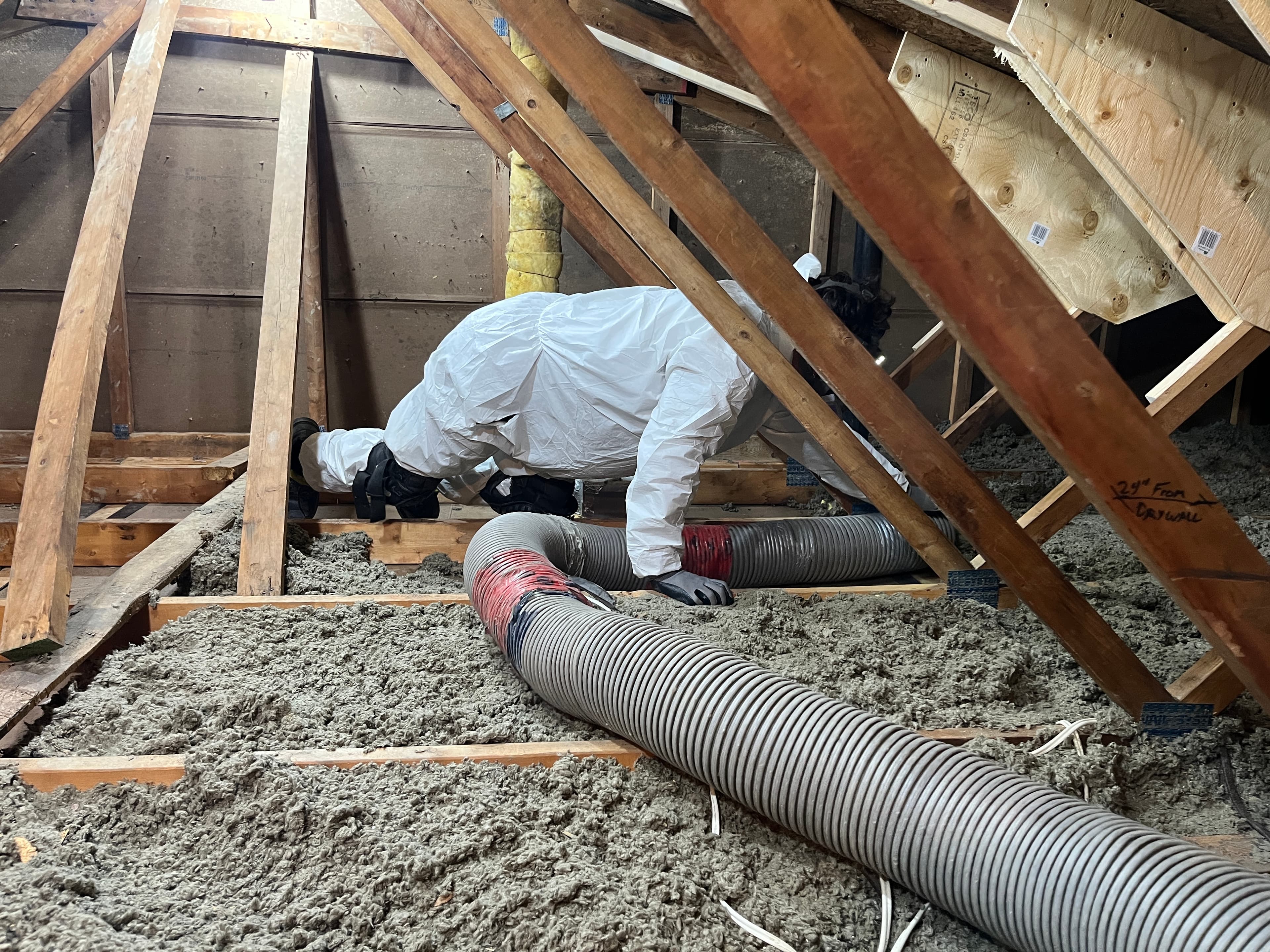
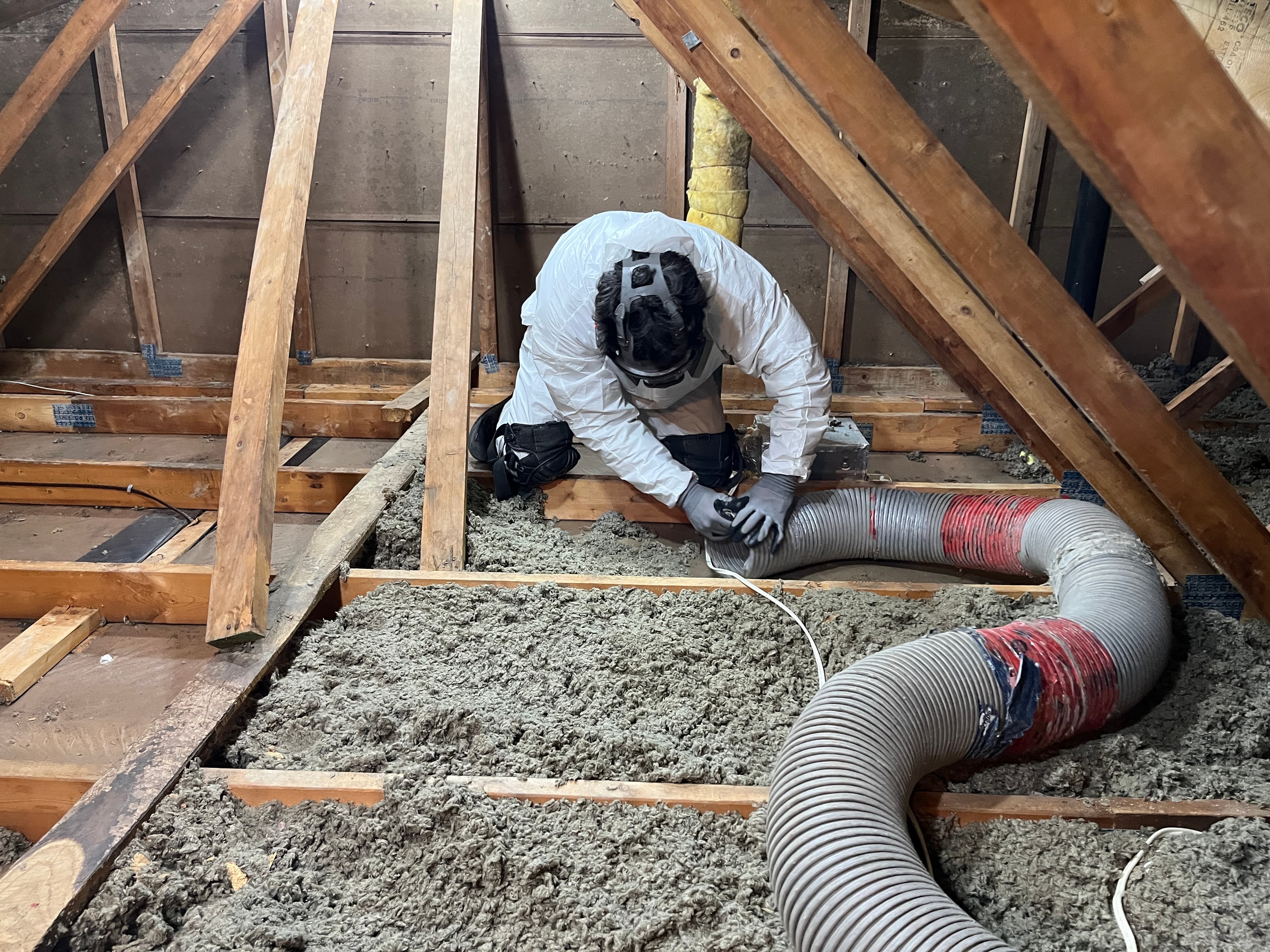
If removal is the right path — for a renovation, resale, or re-insulation project — the process should be handled by a crew experienced with contaminated insulation removal, HEPA containment, and proper disposal procedures. After removal and cleanup, the attic can be properly air sealed and re-insulated.
Frequently asked questions
Is all vermiculite insulation dangerous?
Not necessarily, but Health Canada recommends treating all vermiculite attic insulation as potentially contaminated with asbestos because much of the supply used in Canadian homes came from a contaminated mine. Testing can confirm whether asbestos fibres are present in your specific material.
Can I remove vermiculite insulation myself?
DIY removal is strongly discouraged. Disturbing vermiculite releases fine particles into the air, which can be harmful if asbestos is present. Professional removal using proper containment equipment and disposal procedures is strongly recommended.
Do you handle vermiculite or contaminated attic insulation removal?
Yes. Attic Vac Insulation uses HEPA containment and proper disposal procedures for contaminated attic insulation. If additional abatement certification or environmental testing is required, we can help guide you through the appropriate next steps for your situation.
Sources
- 1.Asbestos and your health — Health Canada
- 2.Keeping the Heat In — Health and safety considerations — Natural Resources Canada
Written by
Attic Vac Insulation
A licensed and insured attic insulation contractor removing, installing and topping up insulation in homes across Toronto and the GTA, and renting the same 14 HP vacuum we work with.