
On this page5 sections
Key takeaway
Why air sealing the attic floor matters before adding insulation in Toronto homes: where the leaks are, what sealing fixes, and what it prevents.
01What is attic air sealing?
Attic air sealing means closing the gaps, cracks, and penetrations in the attic floor — the boundary between your living space and the attic above — so that warm interior air cannot escape directly into the cold attic.
Common air leak points include gaps around pot lights (recessed lighting), attic hatches, plumbing stacks, bathroom exhaust fans, electrical wiring holes, and the tops of interior partition walls. These points are often hidden once covered with insulation, but they can contribute significantly to heat loss and comfort problems.
02Why insulation alone is often not enough
Insulation slows heat transfer by conduction — heat passing slowly through a material over time. But air leaks cause convective heat loss, where warm air physically moves from inside your home directly into the attic. This is faster, harder to control with insulation, and can bypass the insulation layer entirely.
A home with modest insulation but very few air leaks can outperform a home with high-depth insulation and many unsealed gaps. The gaps create shortcuts that let warm air flow around and through the insulation, reducing its real-world effectiveness.
03Common air leak points in Toronto and GTA homes
Pot lights — recessed lighting fixtures in upstairs ceilings — are one of the most common attic air leak sources in GTA homes. Older pot lights have open tops that allow warm air to flow directly into the attic. Sealing or replacing these with airtight versions can make a measurable difference in comfort and heat retention.
Attic hatches are another frequent problem area. An uninsulated or poorly sealed attic hatch is essentially a hole in the ceiling. Adding insulation to the hatch door and a proper weatherstrip seal around the frame is one of the most cost-effective attic improvements a homeowner can make.
Other common leak points include plumbing vent stacks, electrical boxes, exhaust fan connections, partition wall top plates, and gaps around any pipe or wire that passes through the ceiling into the attic.
04The best time to air seal your attic
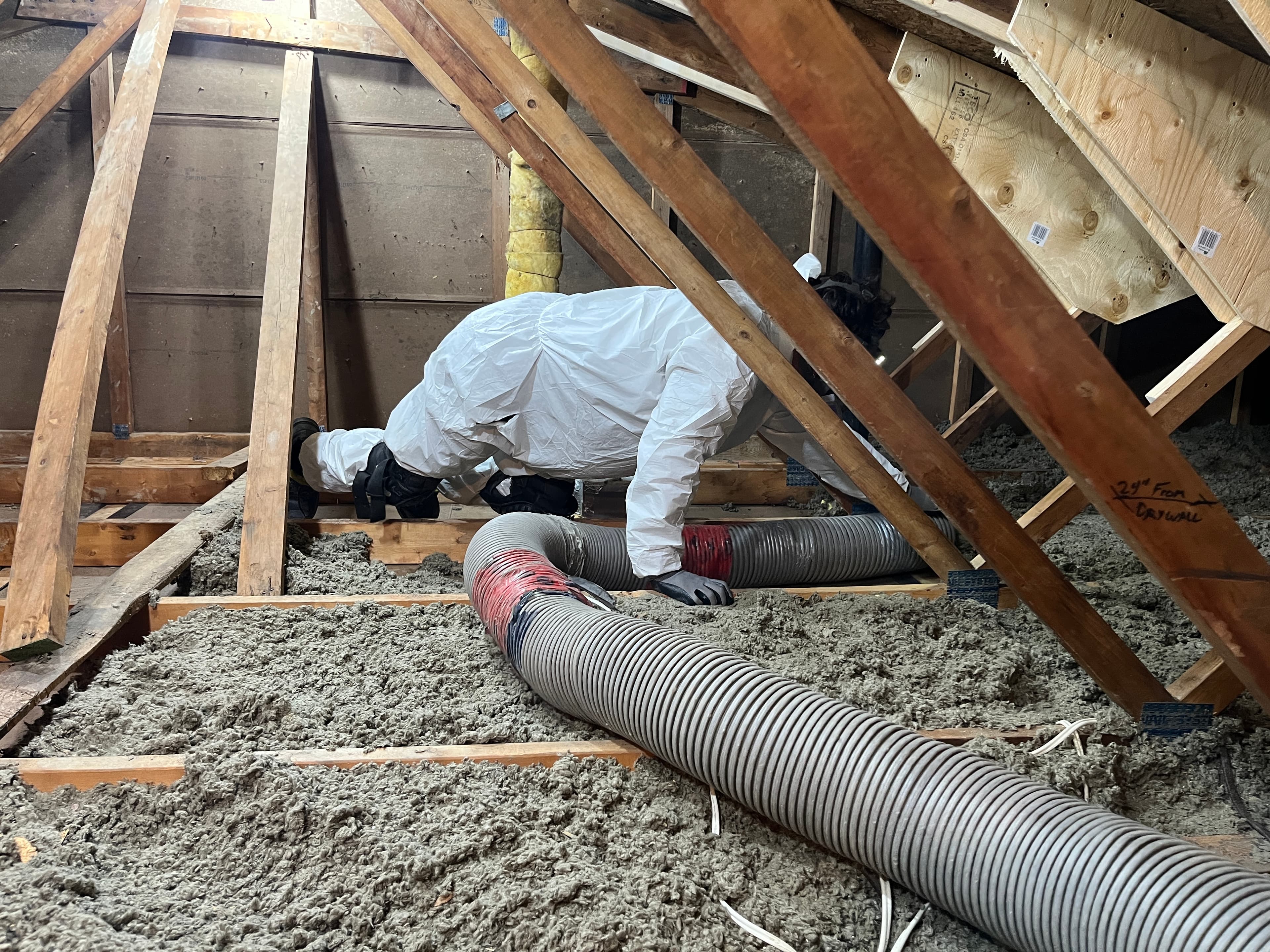
If you are having old insulation removed before a new installation, this is the ideal window for air sealing. With the attic floor cleared down to the joists, all the major gaps are visible and accessible, and sealing them takes much less effort than trying to work around existing insulation.
If your attic already has insulation in place, air sealing around the most accessible penetrations — the attic hatch, any visible pot light gaps, and easily reached plumbing or electrical penetrations — can still improve performance without a full removal.
05How spray foam fits into the air sealing process
Spray foam is one of the most effective materials for attic air sealing because it expands to fill gaps of any shape and creates both an air barrier and a thermal layer in a single application. It is particularly practical for sealing around plumbing stacks, wiring penetrations, and irregular gaps that are difficult to address with rigid foam boards or caulk.
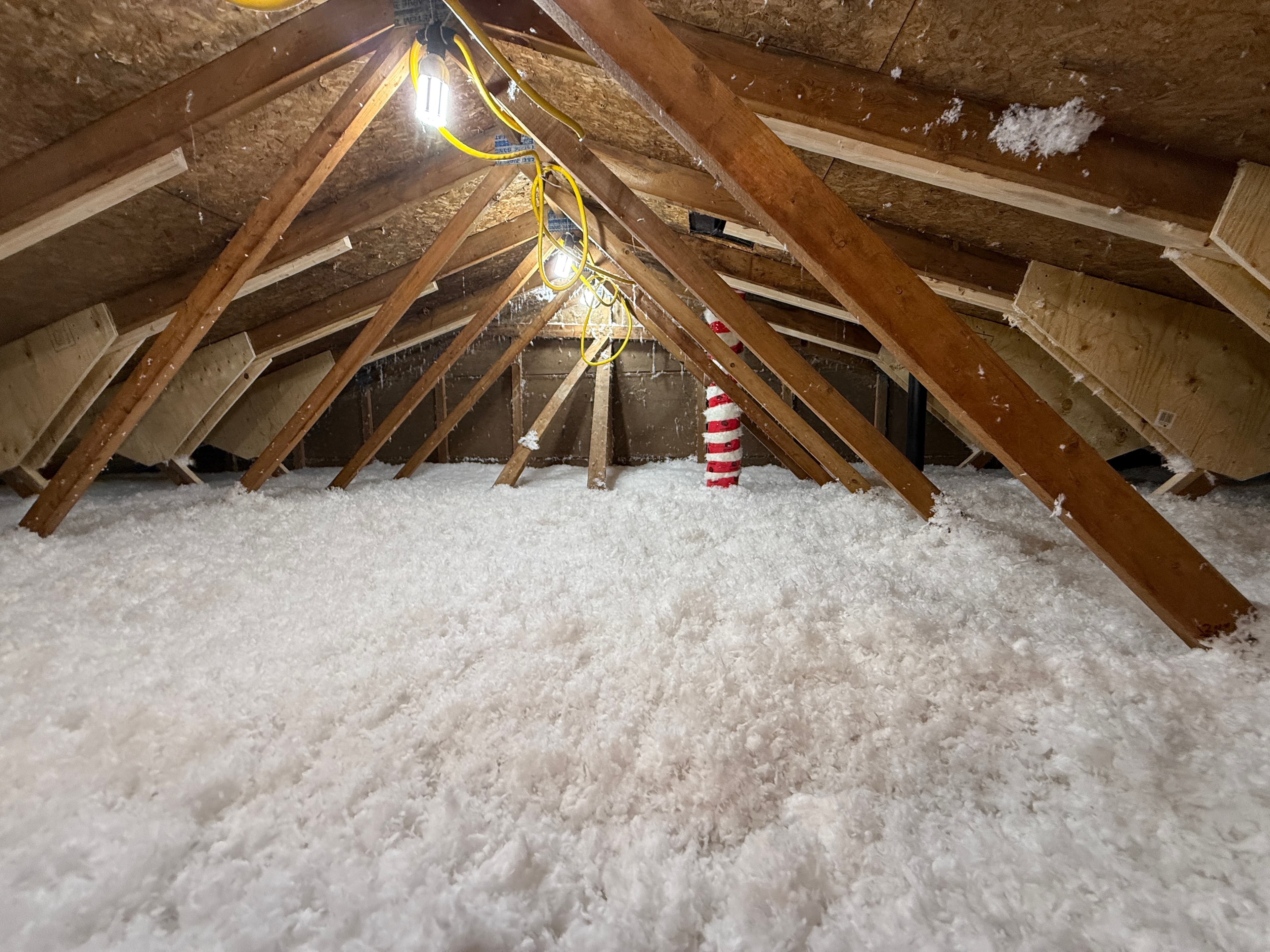
Many attic upgrades use both materials: spray foam for targeted air sealing around penetrations and leak points, and blown-in insulation for the main attic floor coverage where air sealing work is already done. This combination gives both the air barrier and the insulation depth that GTA homes need.
Frequently asked questions
Should I air seal my attic before or after adding insulation?
Air sealing should always be done before adding new insulation. If insulation is already in place, sealing around the attic hatch and any visible penetrations can still help. But the most thorough approach — and the one that delivers the best results — is to air seal with the attic floor cleared so all gaps are visible.
Can spray foam be used for attic air sealing?
Yes. Spray foam is widely used to seal gaps around pot lights, plumbing stacks, exhaust fans, and other penetrations in the attic floor. It expands to fill irregular shapes, creates a durable air barrier, and adds some insulation value at the same time.
How do I know if my attic has significant air leaks?
Common signs include drafts near ceiling fixtures, cold rooms on the upper floor even with adequate insulation, unusually high heating bills in winter, ice dam formation on the roof, and visible gaps around the attic hatch or pot light fixtures when you look from inside the attic.
Sources
- 1.Keeping the Heat In — Roofs and attics — Natural Resources Canada
Written by
Attic Vac Insulation
A licensed and insured attic insulation contractor removing, installing and topping up insulation in homes across Toronto and the GTA, and renting the same 14 HP vacuum we work with.